A good carpet is an investment, and how long it keeps its colour, softness and shape depends largely on how it is cared for. The good news: most machine-made rugs need only a few simple habits to look new for years. This guide covers daily care, stain removal, washing and storage for the most common carpet types.
Everyday care
- Vacuum regularly. Once or twice a week in living areas is enough. Vacuum in the direction of the pile, and use a suction-only setting (no rotating brush) on shaggy and high-pile rugs to avoid pulling the yarns.
- Rotate every six months. Turning the rug 180° evens out wear in walkways and fading from sunlight.
- Use a rug pad. An anti-slip underlay keeps the carpet in place, reduces wear on the backing and makes it more comfortable underfoot.
- Protect from direct sun. Long exposure to strong sunlight fades all fibres — natural fibres like cotton and viscose in particular. Curtains or UV-filtering film help.
- Shake out small rugs. Kilims and small rugs benefit from being shaken or gently beaten outdoors now and then.
Dealing with stains
Speed is everything. The sooner you act, the less a stain penetrates the pile.
- Blot, never rub. Press a clean, white cloth onto the spill to absorb as much as possible. Rubbing spreads the stain and damages the pile.
- Work from the outside in. This keeps the stain from growing.
- Use a mild solution. A teaspoon of neutral detergent in a litre of lukewarm water works for most food and drink stains. For coffee or wine, a little white vinegar in the solution helps.
- Test first. Always try any cleaner on a hidden corner before using it on the visible surface.
- Rinse and dry. Blot with clean water to remove detergent residue, then let the area dry completely — residual soap attracts dirt.
Avoid bleach and strong solvents on any carpet; on viscose they can permanently alter the sheen and colour.
Care by material
- Acrylic: Some shedding is normal in the first weeks and stops after a few cleanings. Machine-washable acrylic rugs should be washed cold or at 30 °C on a gentle cycle.
- Polypropylene: Highly stain-resistant and easy to clean with water and mild detergent — a great choice for kitchens, children's rooms and outdoor use.
- Polyester and polyamide: Durable and easy to clean. Avoid high heat when drying, as it can distort the pile.
- Viscose: Sensitive to water. Spot-clean with as little moisture as possible and leave deep cleaning to professionals.
- Cotton kilims: Most can be machine washed cold. Expect a one-time shrinkage of around 3–4%.
- Wool: Naturally dirt-resistant thanks to its lanolin. Vacuum regularly and have it professionally cleaned every one to two years.
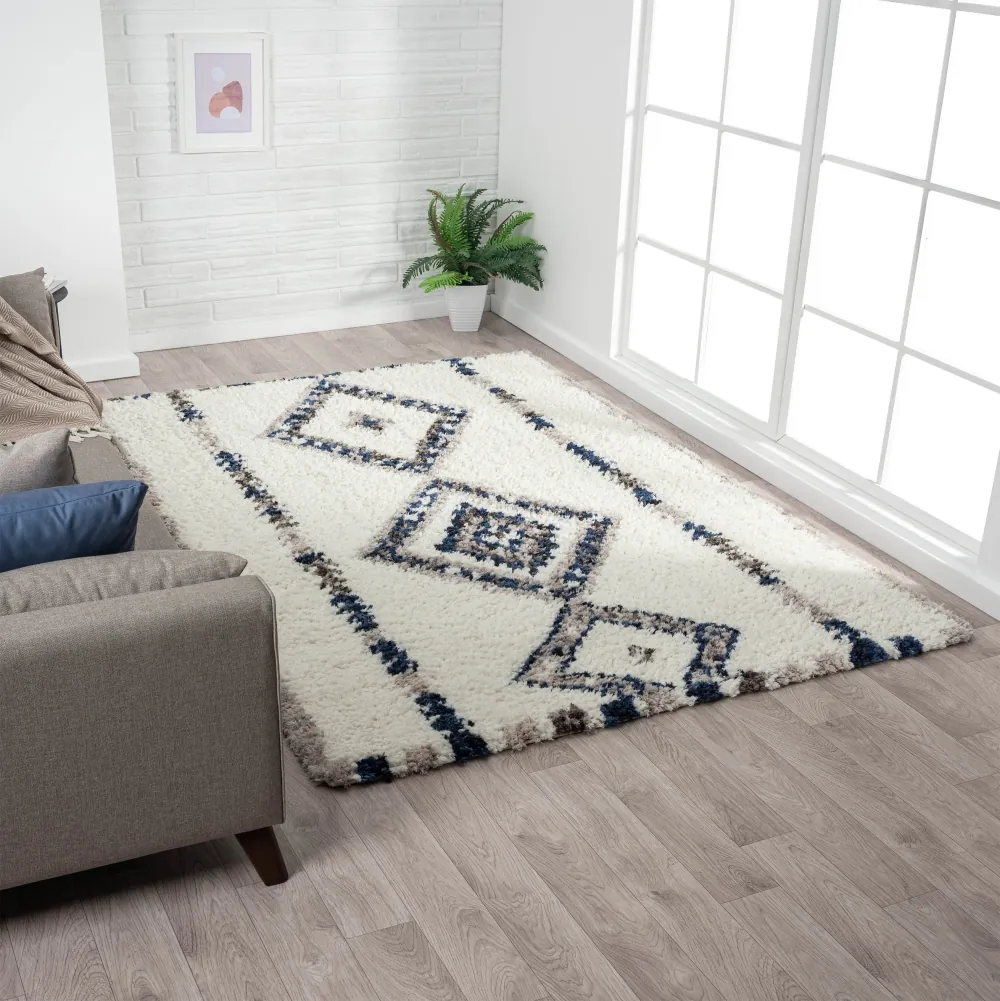
- Shaggy rugs: Shake out debris, vacuum without a brush and comb the pile gently by hand after cleaning.
Washing and drying
Always check the care label first. If a rug is too large for a home machine, use a professional carpet cleaning service rather than washing it in the bathtub — thick, wet carpets are very heavy and dry slowly. When drying, lay the rug flat or hang it over a rail in a ventilated, shaded place; never leave it damp, as moisture trapped in the base can cause odour and mould.
Storage
Clean and fully dry the carpet before storing it. Roll it — never fold it — with the pile facing inwards, wrap it in breathable fabric rather than plastic, and store it in a dry place off the floor. A few cedar blocks or lavender sachets help keep moths away from wool rugs.
Choosing an easy-care carpet
If low maintenance is a priority, choose densely woven polypropylene or polyester carpets in mid-tone or patterned designs, which hide everyday dirt far better than plain light colours. Explore our collections or read our guide on how to judge carpet quality to find the right rug for your space.